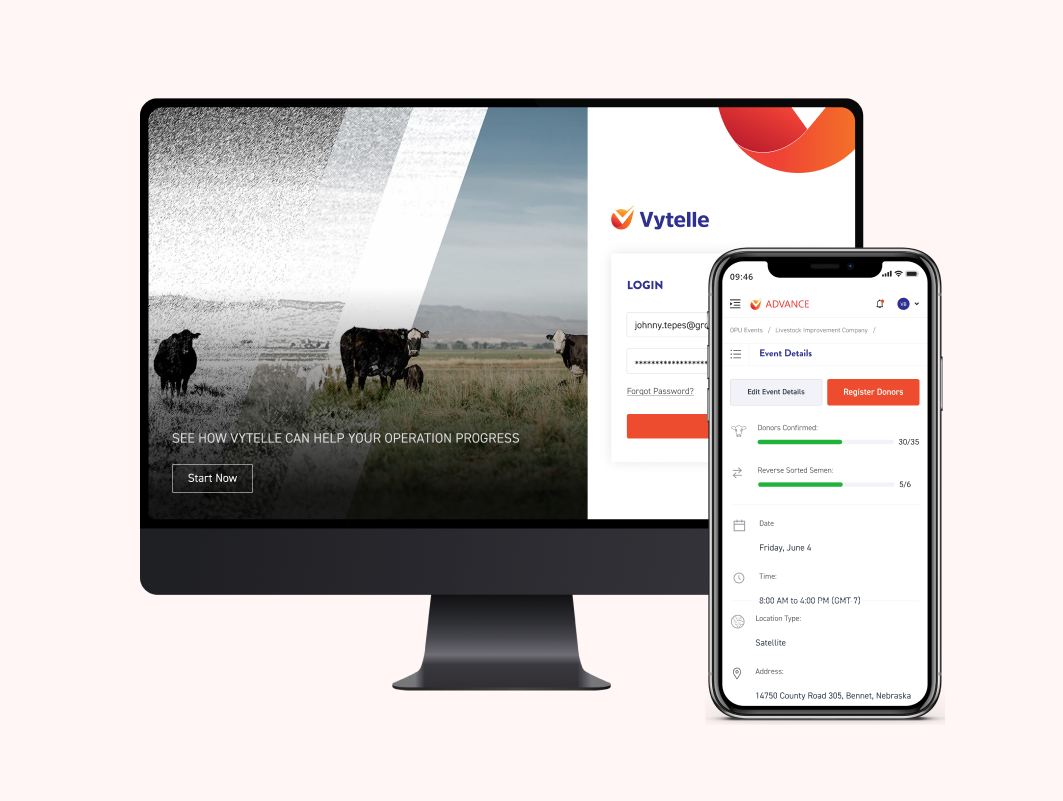
Transforming Cattle Reproduction with Vytelle Advance
Role: Product Designer
Duration: 12+ Weeks
This case study explores my collaboration with Vytelle in transforming cattle reproduction through the implementation of Vytelle Advance. We automated their IVF and OPU processes, streamlining reproduction and elevating sustainability. Explore the challenges, solutions, and transformative results of our partnership.
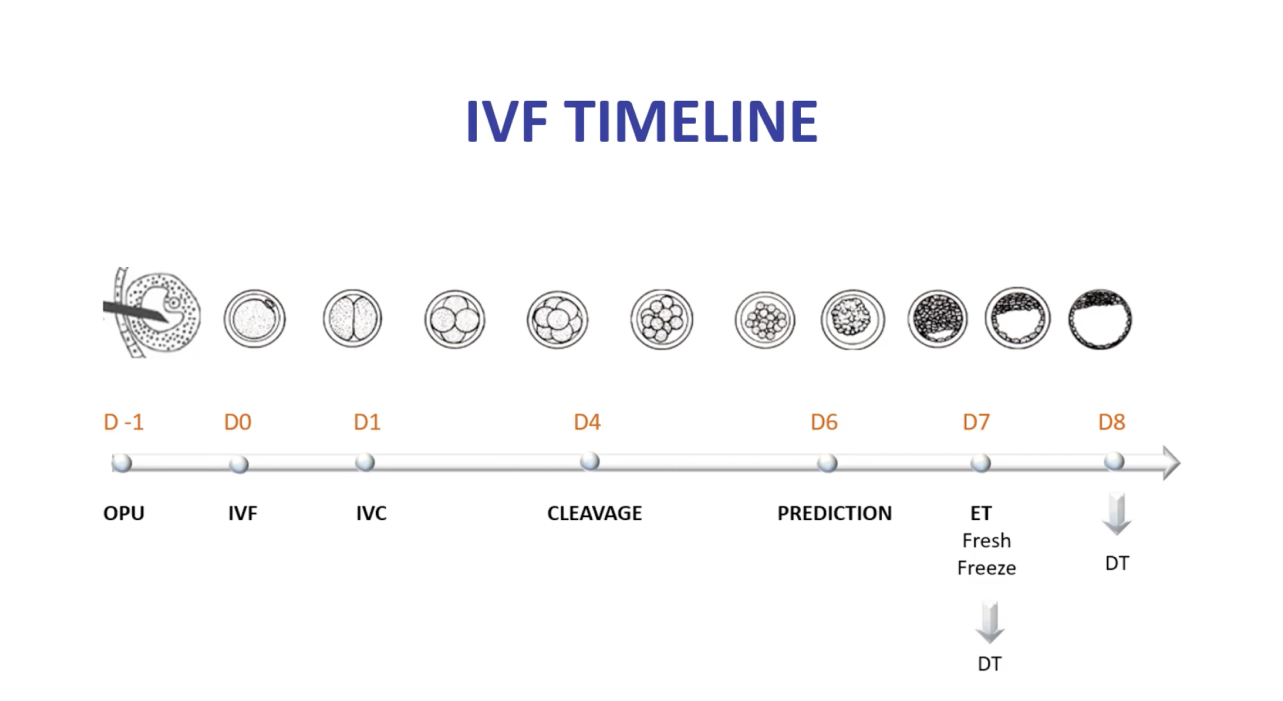
Vytelle, a prominent figure in livestock solutions, confronted a pressing issue. Their current operations heavily depended on labor-intensive manual data entry, particularly during Ovum Pick Up (OPU), and the management of various laboratory tasks, such as tracking inventory, overseeing mating, and sorting semen.
As the operations for (IVF) processes expanded, the paper-based manual processes were causing inefficiencies and slowing down the performance at all levels.
Booking OPU events was a big hassle because location partners were using old-fashioned methods like emails and phones to talk to clients.
Vytelle's clients didn’t have any visibility on the number of semen and oocytes that have been used and couldn’t prepare for the next OPU.
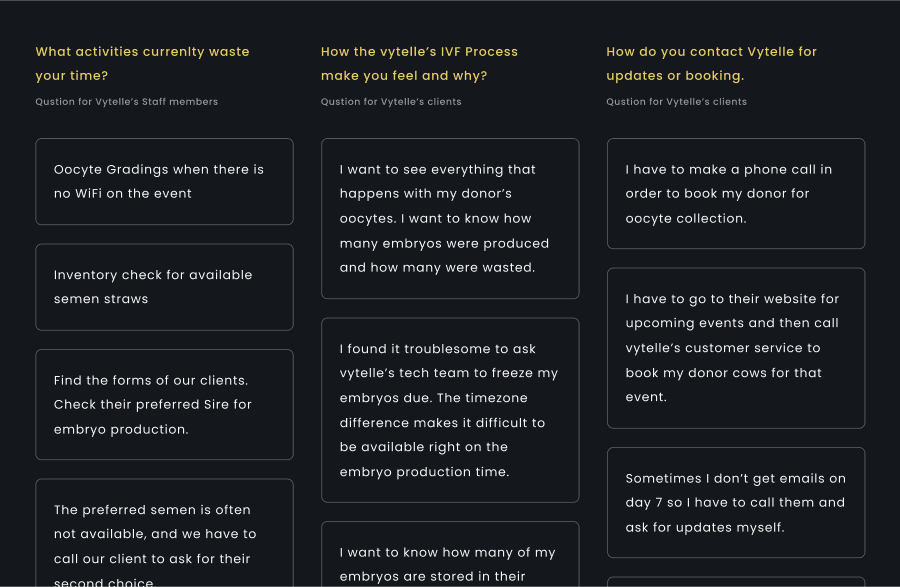
Vytelle's customers weren't filling out paper-based donor forms containing essential details about donor cows, sires, and collection times. As a result, the technicians performing oocyte collection had to manually jot down all the information, consuming significant time and necessitating subsequent manual data entry into the system.
The semen-packing checklist was in the form of a spreadsheet that had to be manually updated every time.
The Solution
As a Product designer on this project, my objective was to design a comprehensive web application that automates data entry, offers real-time process tracking, and facilitated online bookings for Sires and Donor Cows. This solution significantly improved efficiency and customer satisfaction.
Product Discovery Kick-off 🚀
Our product design journey commenced with an extensive 4-5 week discovery phase, a critical first step in understanding the intricacies of Vytelle's operations. Given the unique nature of this project, we initially lacked insights into their processes.
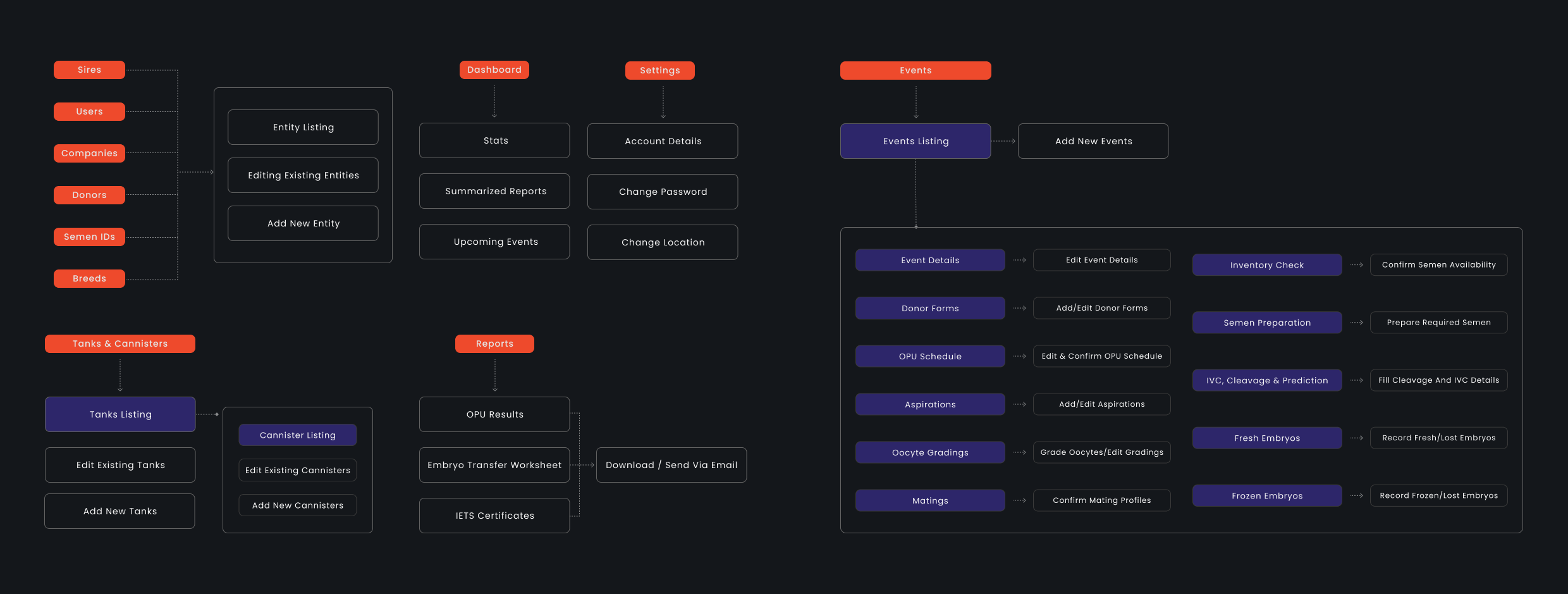
One of many diagrams to get a better understanding of their processes and requriments
Understanding the Landscape:
During this discovery phase, our primary objective was to familiarize ourselves with their entire process. To achieve this, we engaged in frequent client consultations, to understand every step of the Ovum Pick-Up (OPU) process. Our initial efforts resulted in the creation of a preliminary flow diagram, providing a visual representation of each OPU step and the key users involved.
User Interviews for Deeper Insights:
To gain a more profound understanding of the user experience, we conducted extensive interviews. Our primary focus was on engaging with Vytelle staff members, who would be the primary beneficiaries of the system we were developing.
Identifying User Groups:
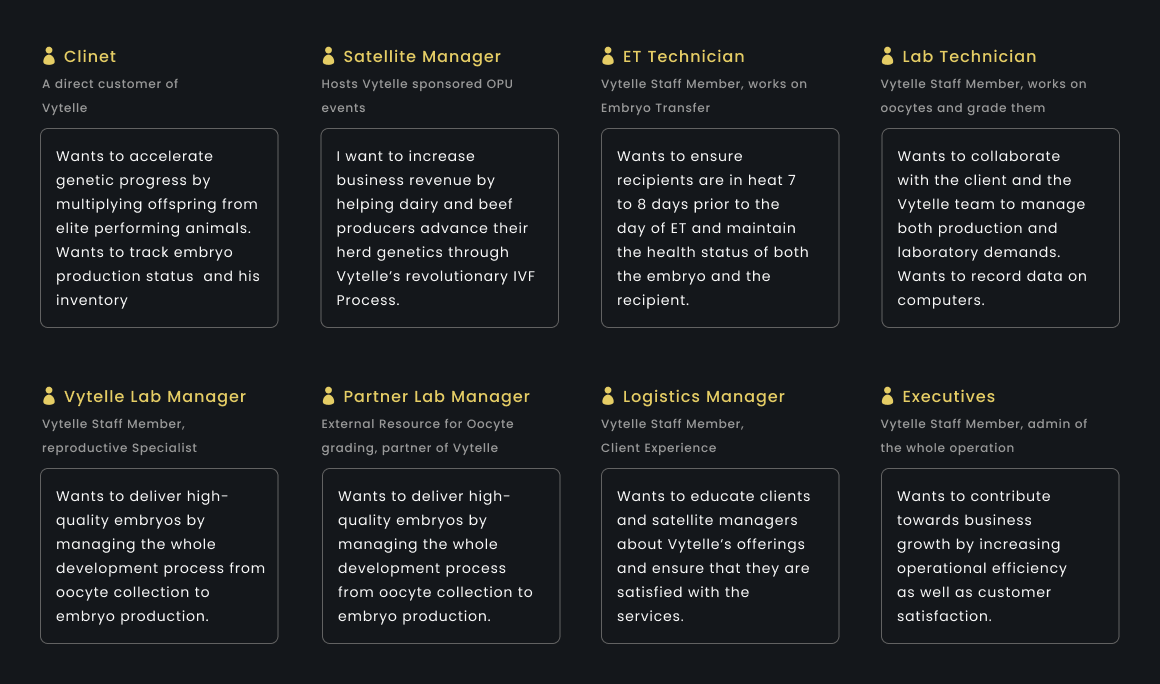
With a comprehensive grasp of the process, we proceeded to identify eight distinct user groups operating at various stages. This stage was pivotal in shaping our design approach.
Creating User Personas and Journeys:
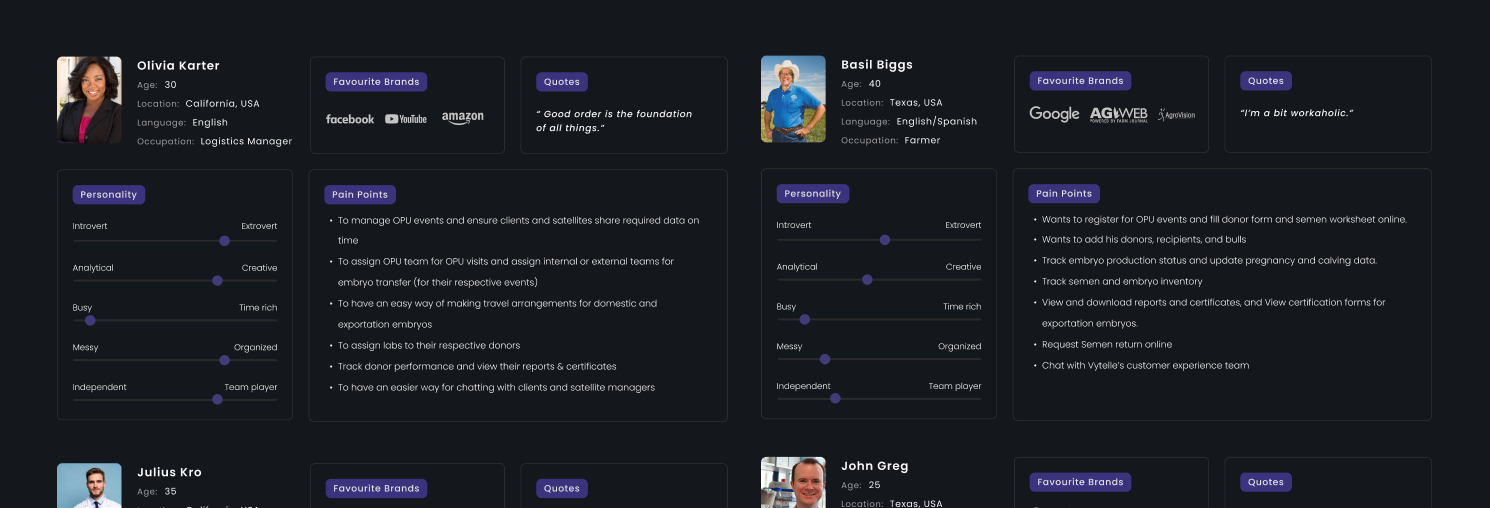
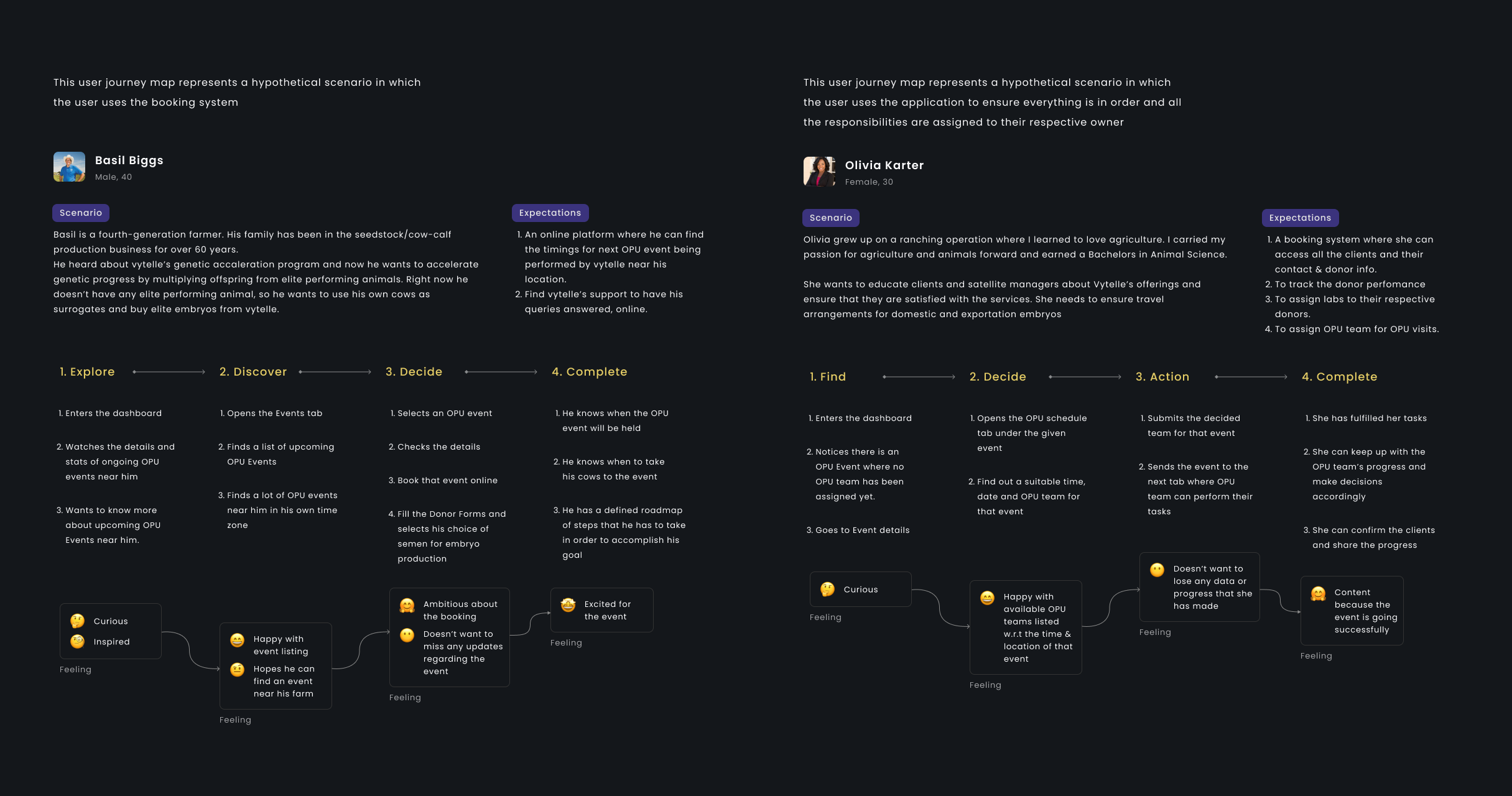
Next, we transitioned into the user-centric design phase. Crafting detailed user personas and mapping out their user journeys allowed us to uncover pain points and assess user involvement levels at each step.
We ensured that we not only comprehensively understood Vytelle's operations but also laid a solid foundation for our subsequent design and development phases.
Information Architecture
We crafted a rough information architecture for the app to establish a clear foundation. This preliminary framework served as our guide, ensuring that the subsequent design and development phases aligned seamlessly with the project's objectives. It helped us visualize the app's structure, content organization, and user flow, setting the stage for an efficient and user-friendly final product.
Wireframes and concept testing
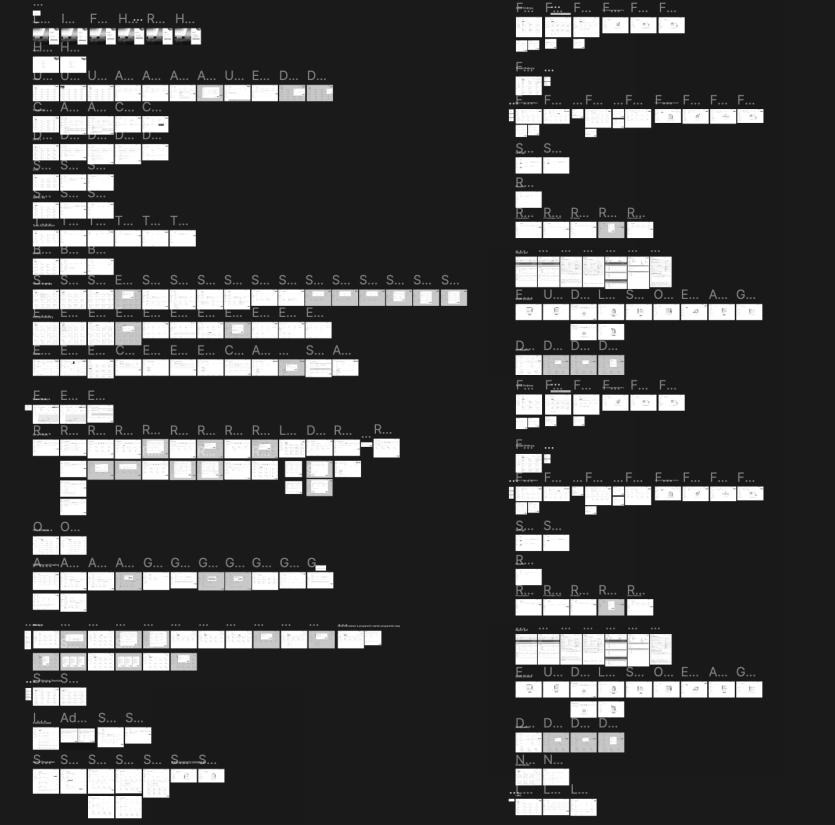
After completing the initial stages, we transitioned into the wireframing process. This phase spanned approximately four weeks, accompanied by frequent client meetings to ensure alignment with project requirements, leaving no room for oversight. Given the project's complexity, we paid close attention to every detail within the wireframes, aiming for perfection and accuracy.
"We conducted tests on these concepts with the staff members responsible for data input into the app. The results were promising, with an impressive 90% task completion rate achieved by Vytelle's staff members, including lab technicians and managers from both sides."
yes it was massive, and messy :')
Once the concepts were validated and approved by the vytelle representatives, we moved on to the next step.
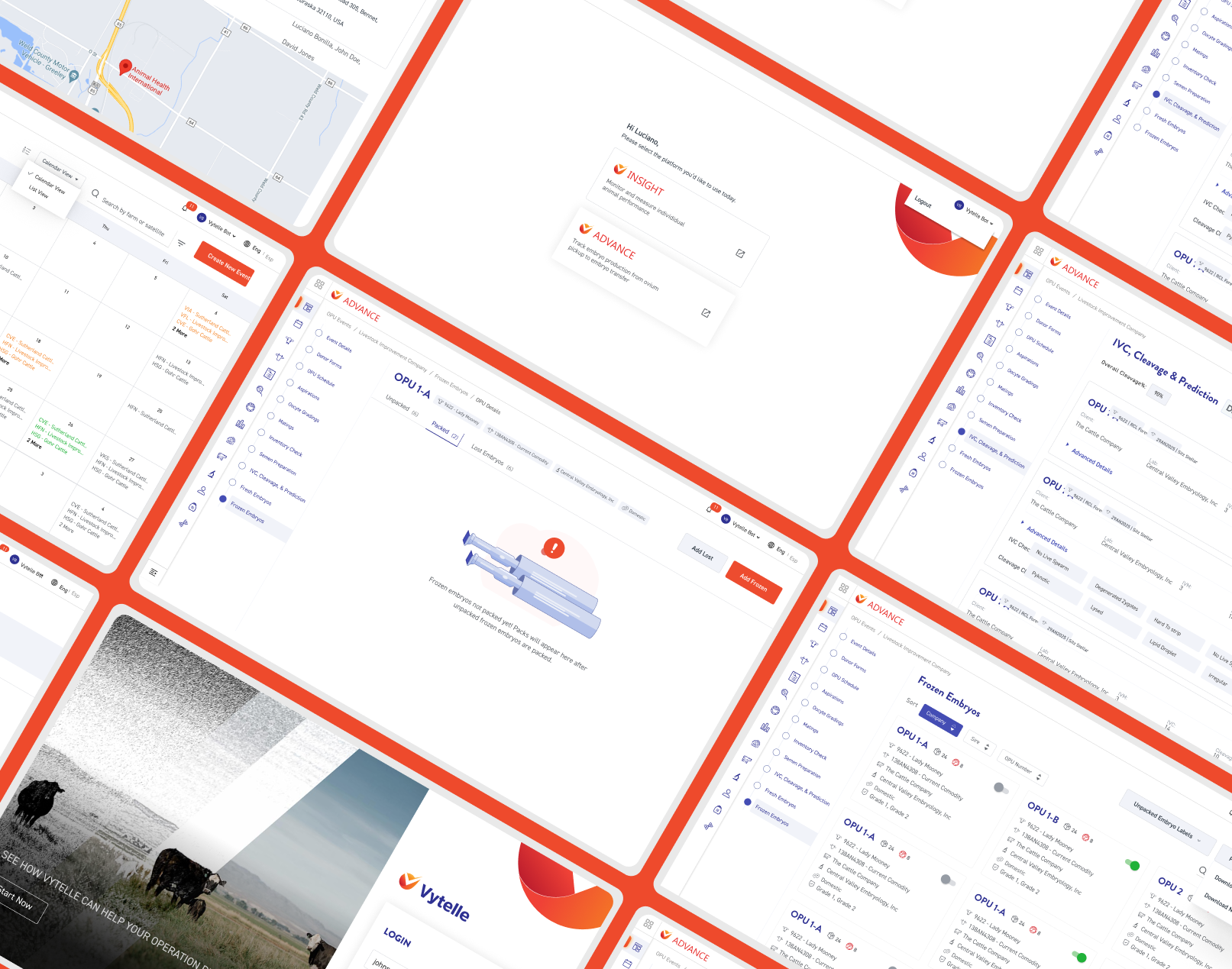
The brand new IVF Management system is here
Let's explore the ins and outs of each design flow.
Platform Selection
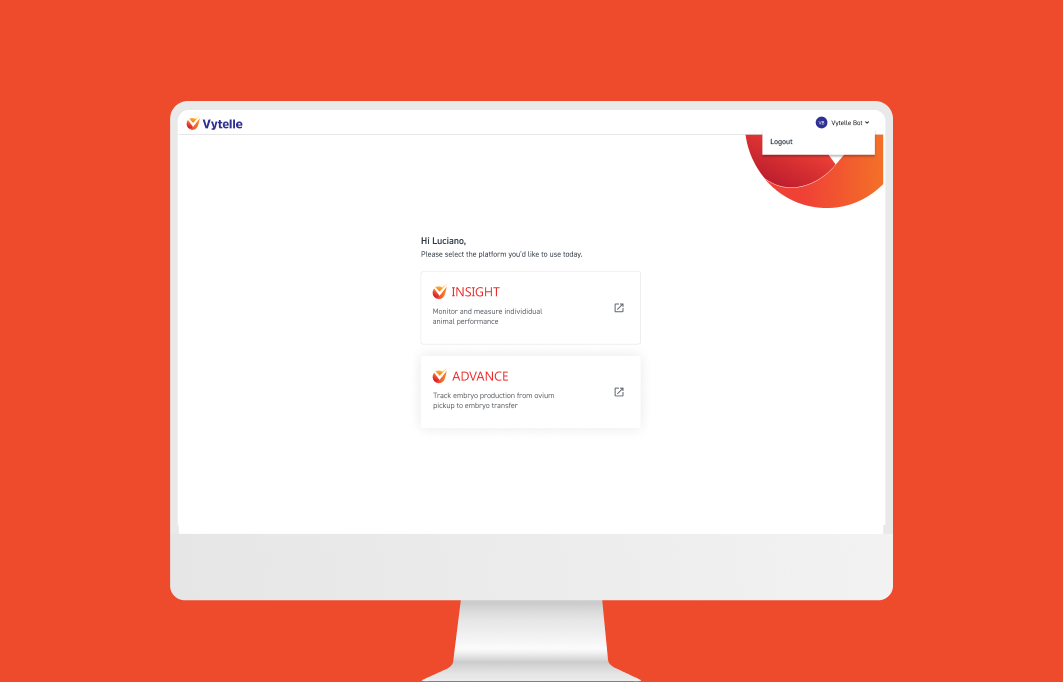
Vytelle's existing user base was already accustomed to Vytelle Sense (their proprietary individual animal data capture system named INSIGHT). Therefore, our task was to design a seamless solution that would allow for effortless transition between Vytelle Sense and the new system (Vytelle Advance)
Our approach was to prioritize user convenience and continuity. We implemented a straightforward solution: a user-friendly dropdown menu positioned at the top of the interface. This dropdown empowers users to easily switch between the two platforms, ensuring a smooth and intuitive user experience. By incorporating this feature, we aimed to minimize disruption and provide a cohesive transition for users accustomed to Insights platform while embracing the new system.
Event Calendar
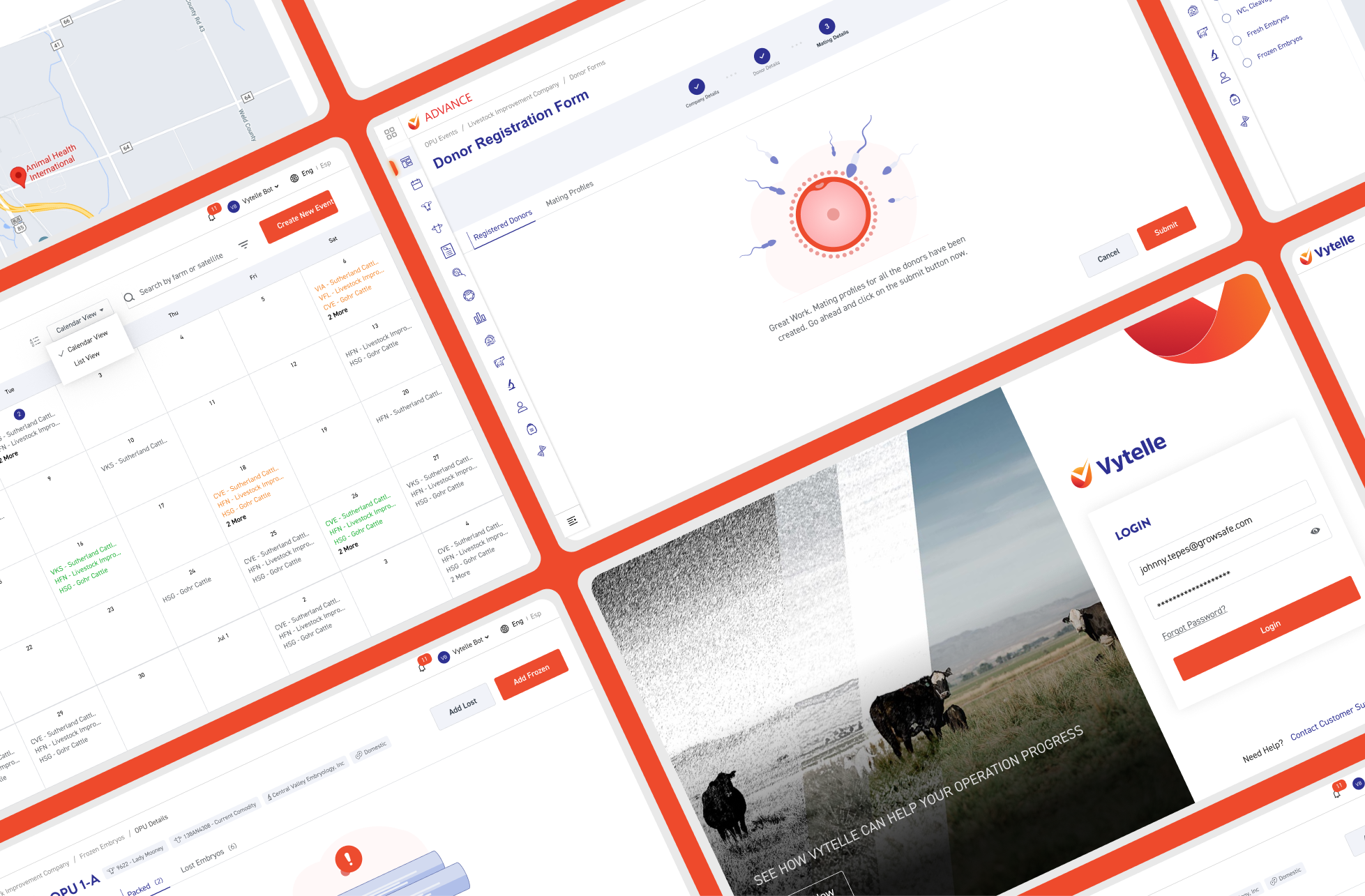
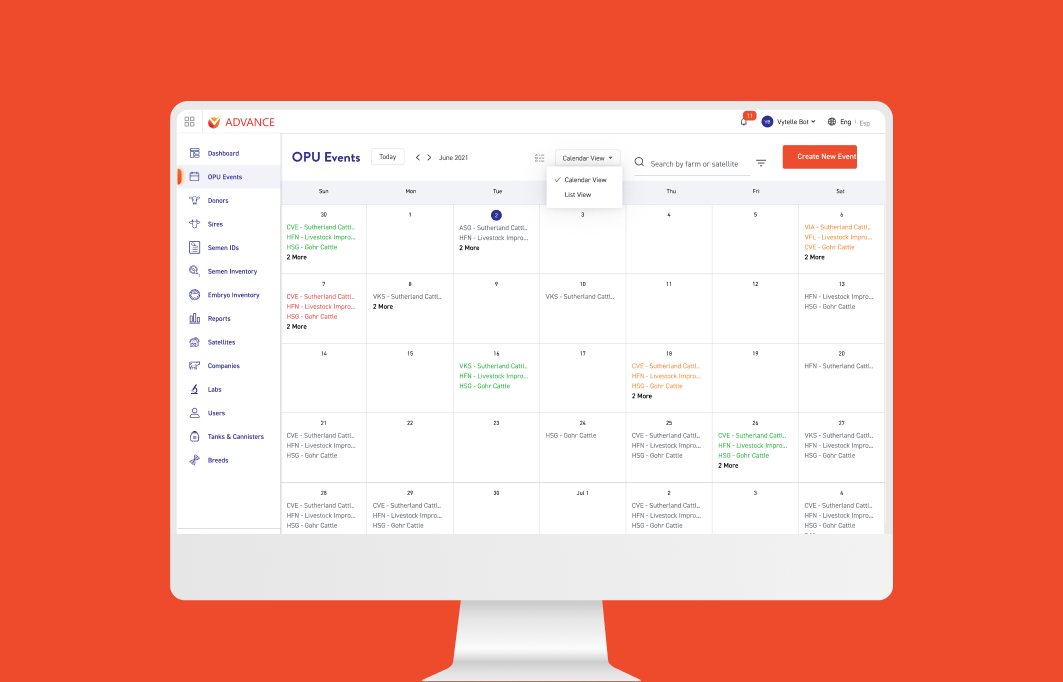
The user interface design drew inspiration from Google's Calendar, fostering user familiarity and ease of use. Vytelle's primary aim was to provide their staff members with a system that allowed them to swiftly identify available time slots. This objective led to the development of a monthly grid calendar, offering a clear visual representation of open slots.
To enhance event status visibility (active/inactive/pending/declined), a color-coded system was implemented, with a legend positioned at the top for user reference.
Event Stages Navigation
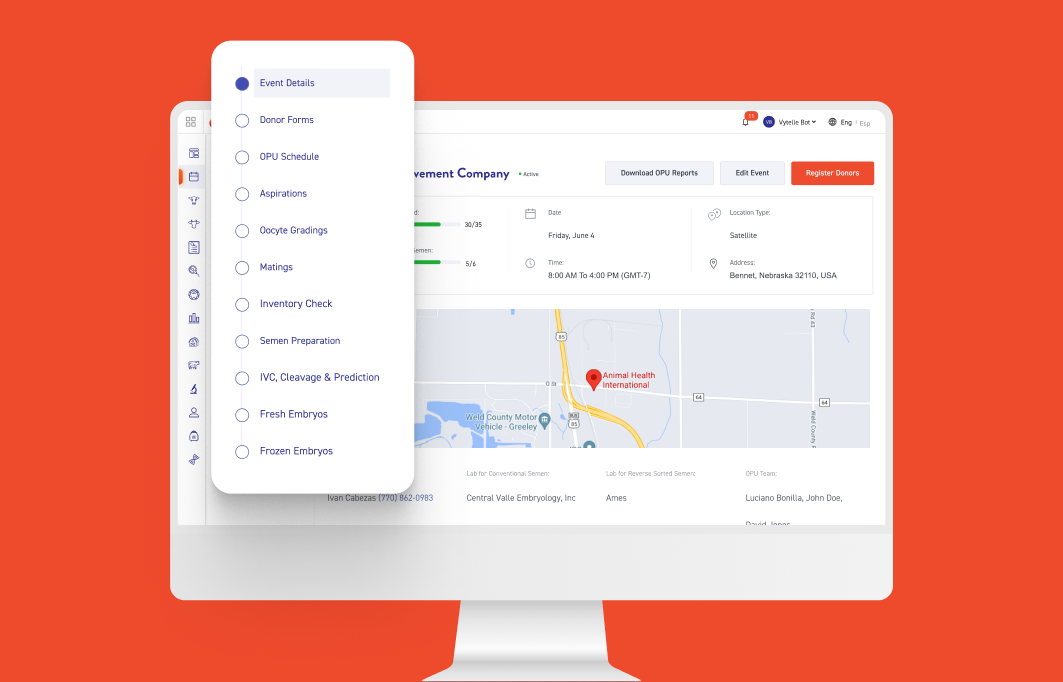
Given that each IVF event comprises 11 distinct stages, each involving 8 different users, each with unique roles, the necessity for an internal navigation system was evident. This system allows clients to seamlessly navigate through various event stages, ensuring transparency and keeping clients informed throughout the process.
Another notable challenge was crafting a mobile-responsive navigation design. To address this challenge, we employed a drawer-style side navigation.
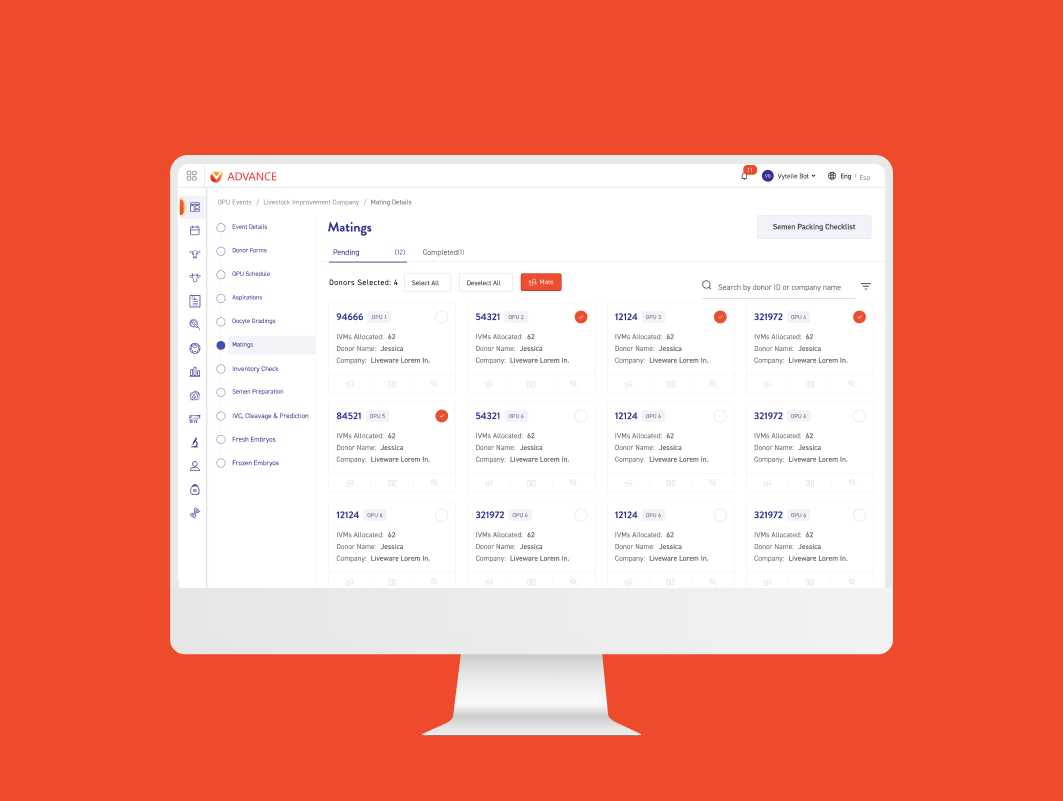
Mating Profiles
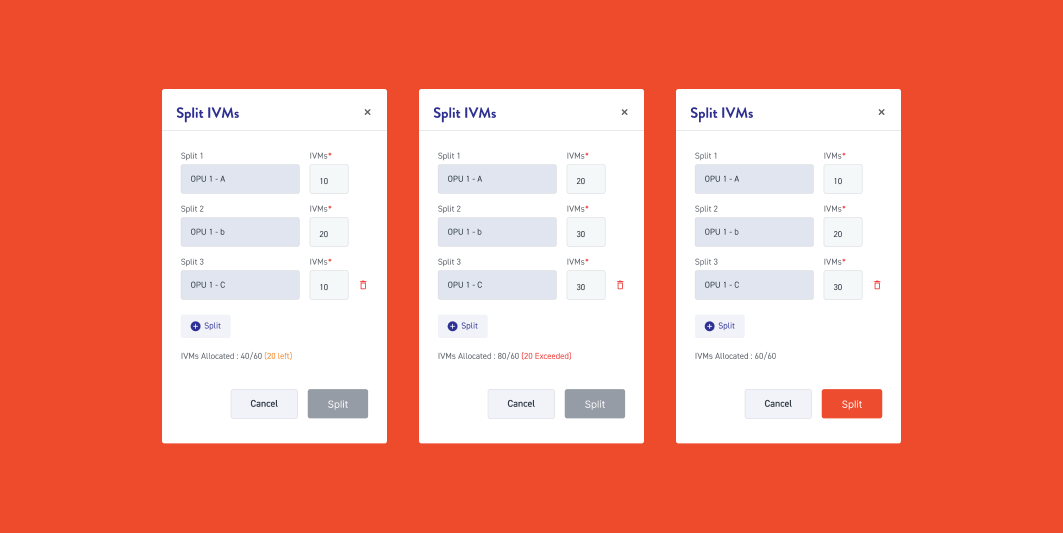
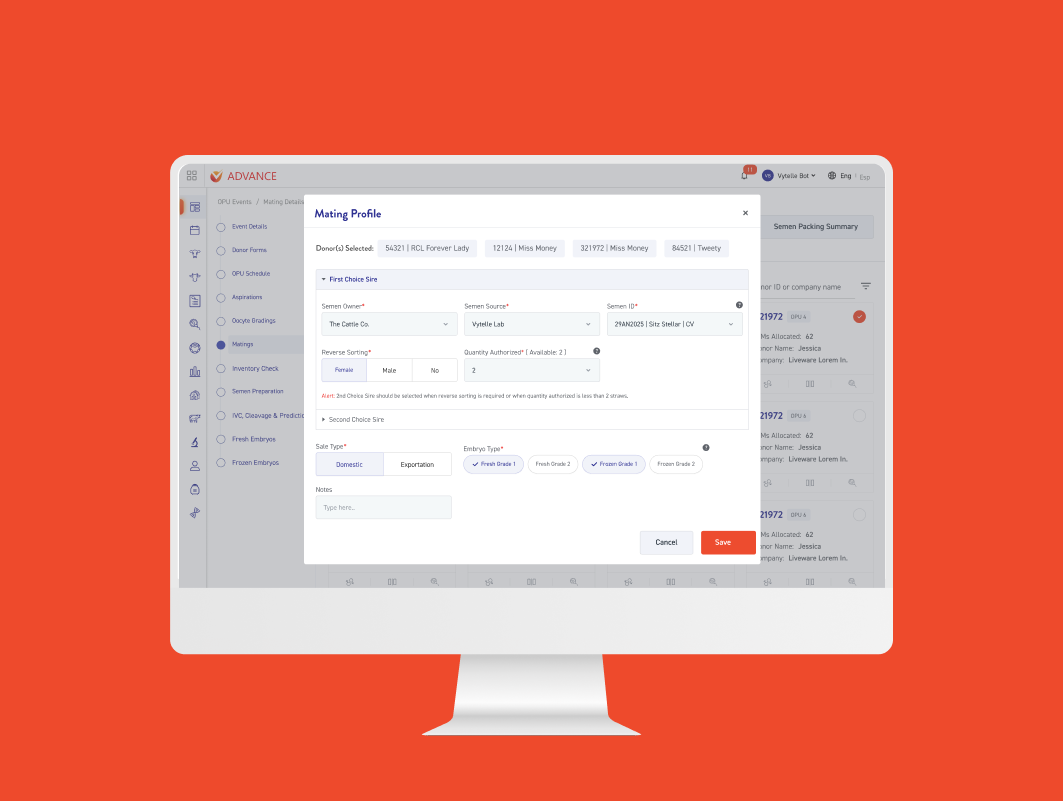
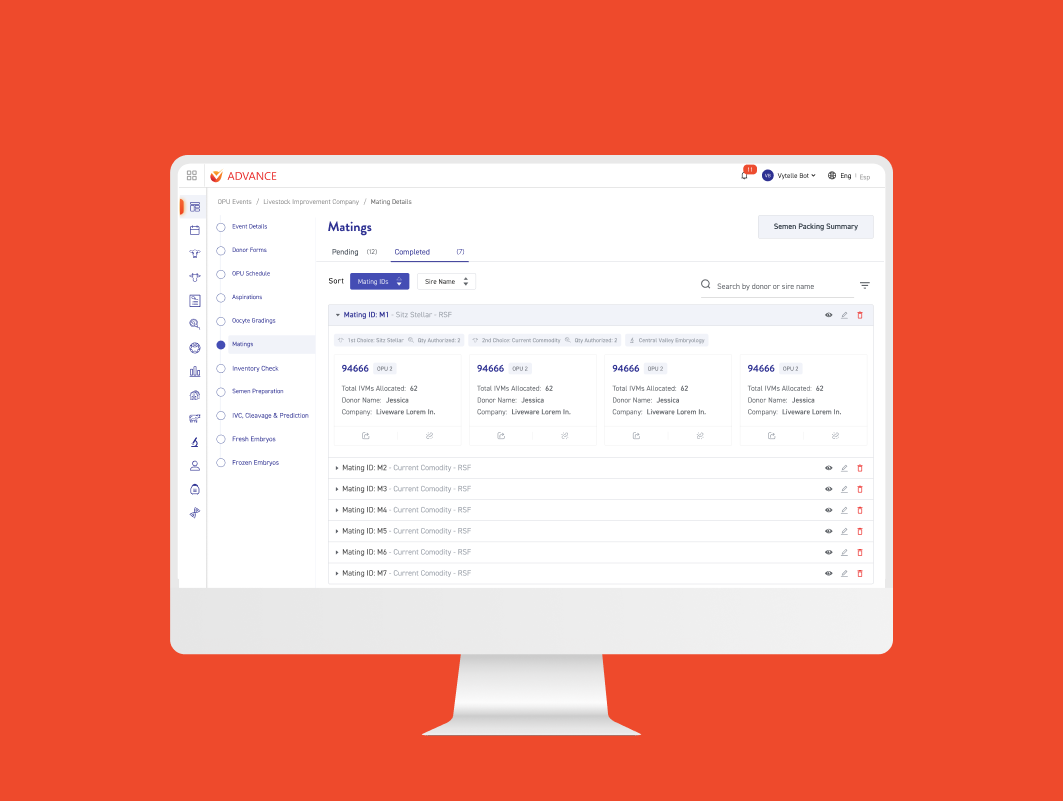
The most significant challenge we encountered revolved around the creation of mating profiles. After oocytes were graded, they became available for mating with authorized semen samples from the lab. However, the semen aspect introduced several variables. If the required sire's semen wasn't available, farmers needed the option to add their own samples. Additionally, there was a need to enable farmers to divide the collected In Vitro Maturation (IVM) samples, allowing for mating with different sire's semen.
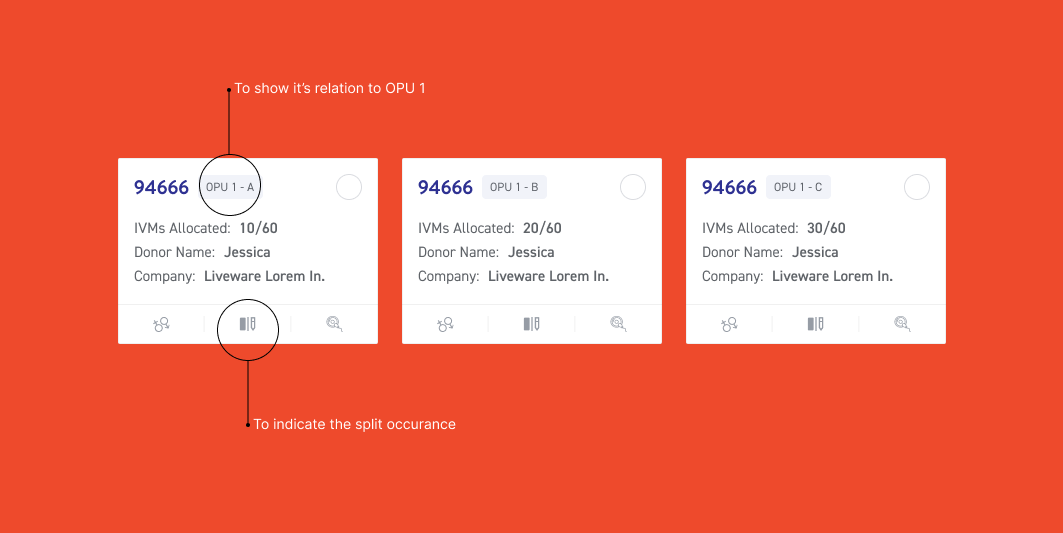
Given that each procedure required only 12-30 oocytes, and farmers could split them if the graded IVMs exceeded 60 oocytes, this introduced complexity. Managing multiple OPUs within a single screen became a daunting task. After splitting, farmers might choose to mate some IVMs with one sire and the remaining with another, which involved answering intricate questions. This process became time-consuming and prone to errors, especially when dealing with multiple IVMs.
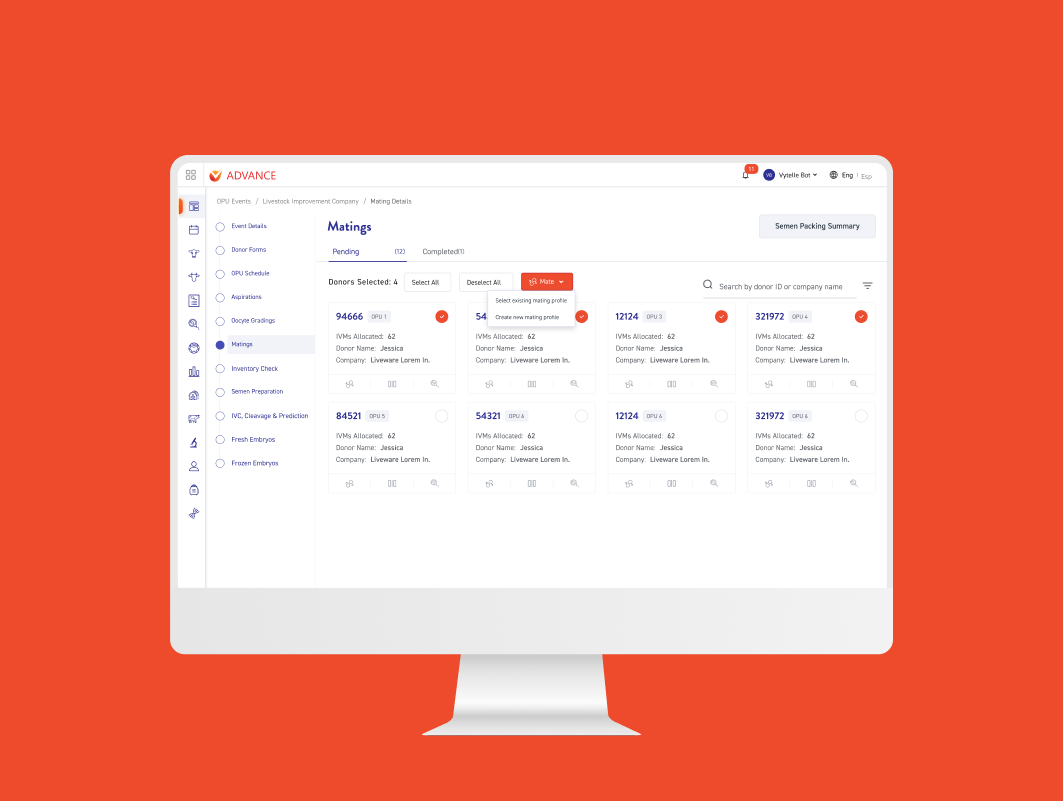
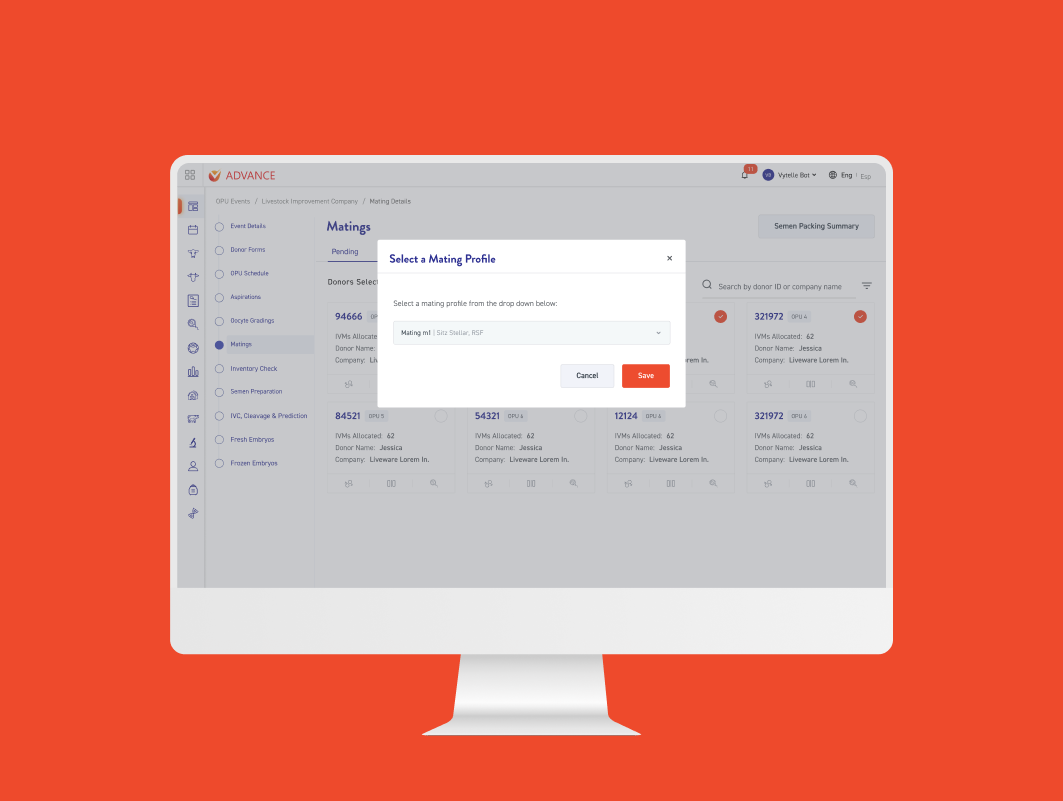
To streamline this intricate process, I introduced the concept of 'Mating Profiles.' All selected IVMs were initially transferred into a Mating Profile, essentially a convenient grouping of items with associated profiles and settings. Users could then easily place a 6th IVM or additional ones directly into the required Mating Profile, eliminating the need to repeat the entire mating process.
Aspiration and Oocyte Gradings
In the cattle IVF and oocyte grading step, we encountered two different situations that required smart solutions.
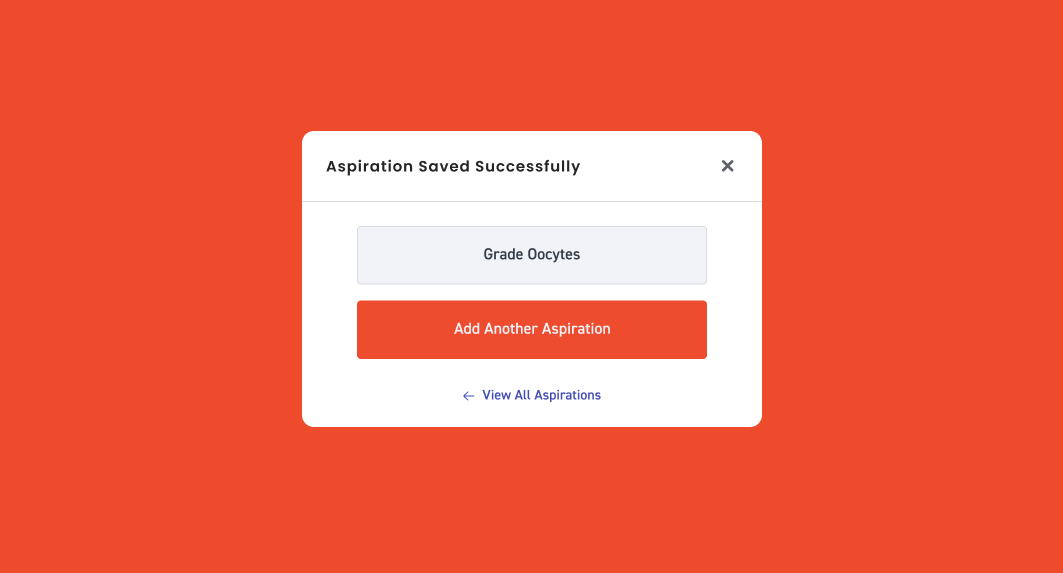
Case A: In locations without internet connectivity, a single individual undertakes both the aspiration and oocyte grading processes. In this scenario, the operator requires a seamless and spontaneous workflow to assess oocytes immediately following aspiration.
Case B: Conversely, in areas with internet access, two distinct lab technicians handle aspiration and grading tasks separately.
Our fix works for both cases. After each aspiration, the system asks the user, who's usually an experienced tech, if they want to grade the oocytes they just collected or start another aspiration. This way, it keeps things flexible and smooth for everyone involved in cattle IVF and oocyte grading.
Inventory Check in a temporary DB
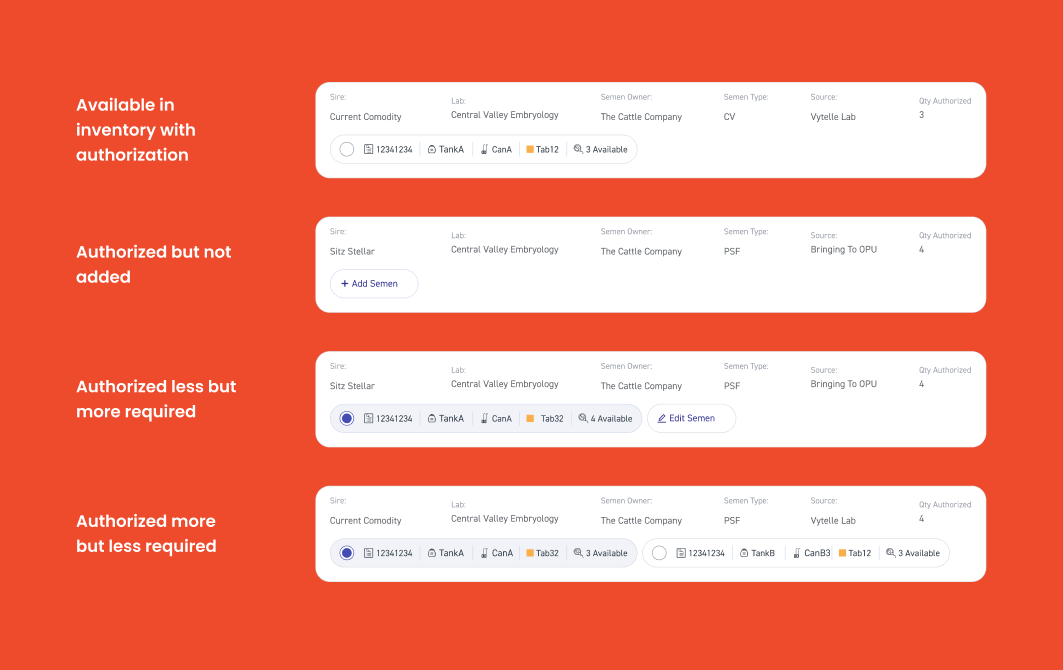
Another significant challenge we addressed was designing a solution for inventory management. Once the mating profiles are established, Vytelle's staff members need to verify if the necessary semen from specific Sires is available in the Vytelle inventory, ensuring an adequate quantity is on hand. In cases where the required semen is not in stock, they must manually add it to the inventory. However, frequent changes in semen selection could potentially result in chaotic and inconclusive inventory records.
To tackle this issue, I proposed the implementation of a temporary database. This innovation allows for the confirmation of semen batches without immediately affecting the actual inventory. Instead, it records changes in the current semen cards, as demonstrated in the screenshot. The data from this temporary database is only transferred to the official inventory database upon completion of semen preparation, ensuring accurate and reliable inventory management.
Fresh/Frozen Embryos
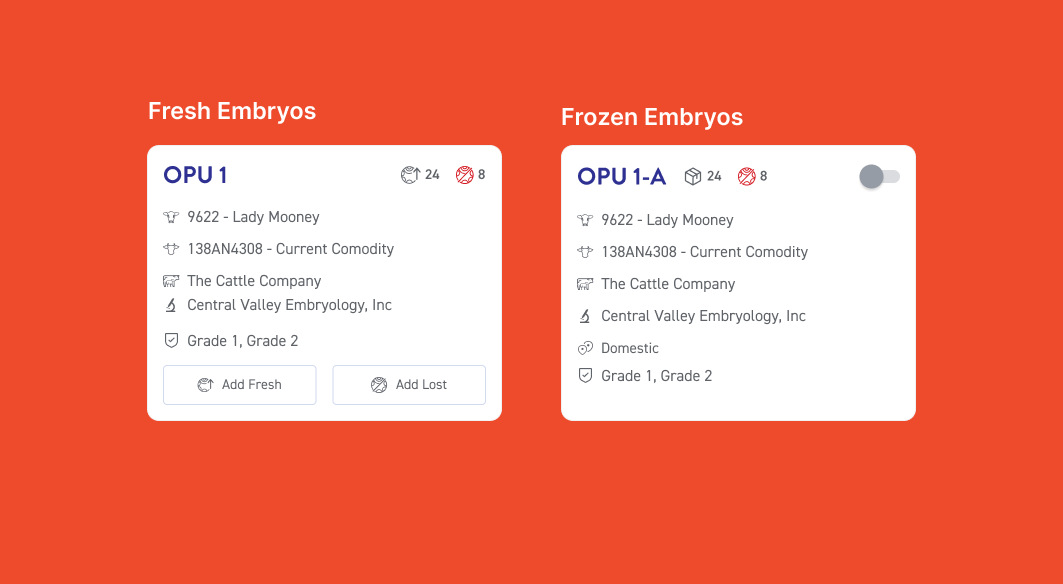
Following the production of embryos, there are two distinct routes they can take: they can either be employed or documented as 'fresh' specimens, or they can be cryogenically frozen and stored in Vytelle's inventory for future use. Fresh embryos are dispatched to various laboratories, while frozen ones remain within Vytelle's inventory.
The challenge we faced involved designing a system capable of meticulously recording both fresh and frozen embryos for each OPU (Ovum Pick Up), keeping track of lost embryos per OPU, and documenting the destinations to which these embryos were dispatched.
Our solution was to divide these two stages into separate tabs, allowing for the independent and accurate recording of embryo counts, ensuring precise data management for each OPU procedure.
Iconography
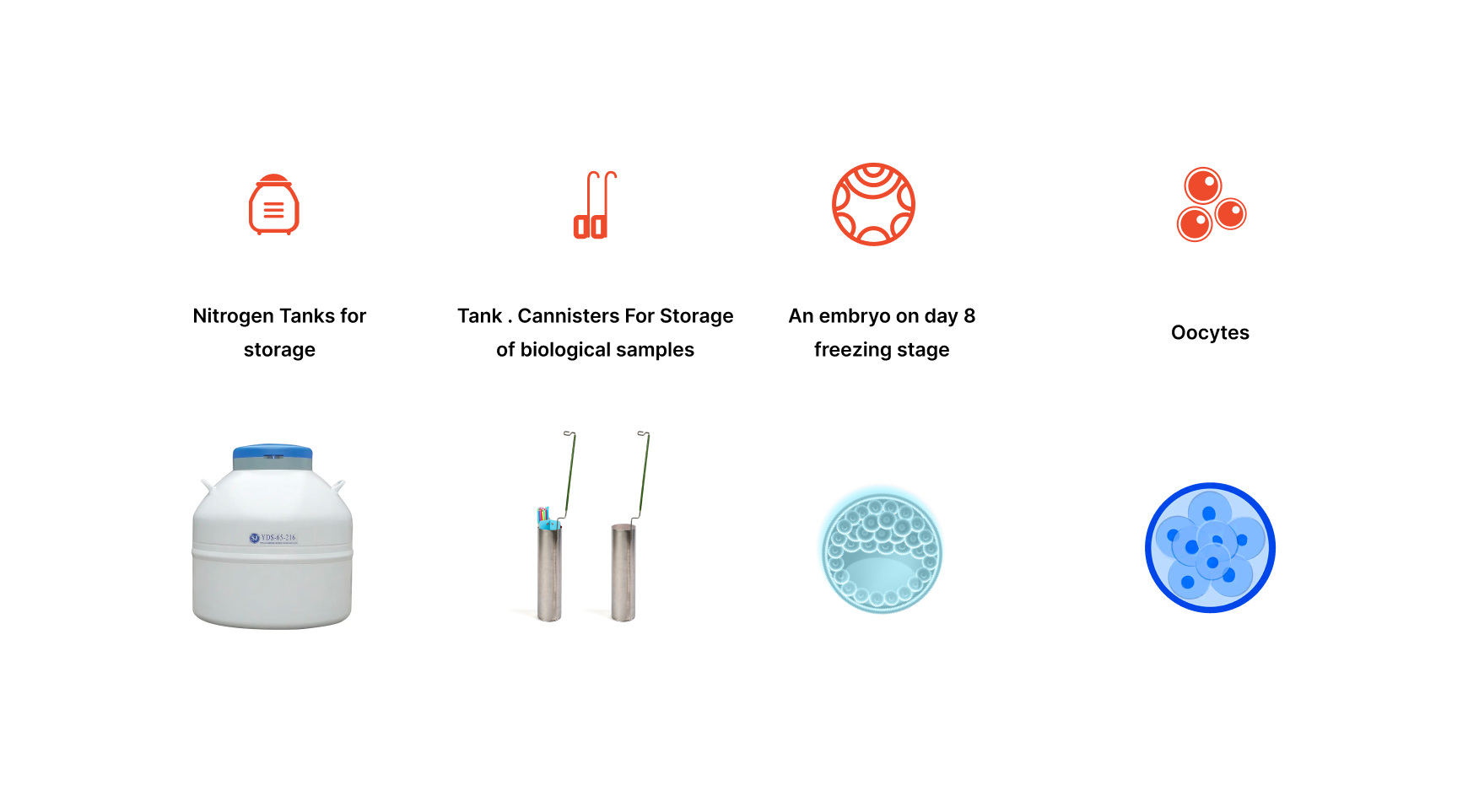
Given the distinctive nature of this project, I encountered a significant need to create my own icons and illustrations, as they were not readily accessible on the internet.
Illustrations
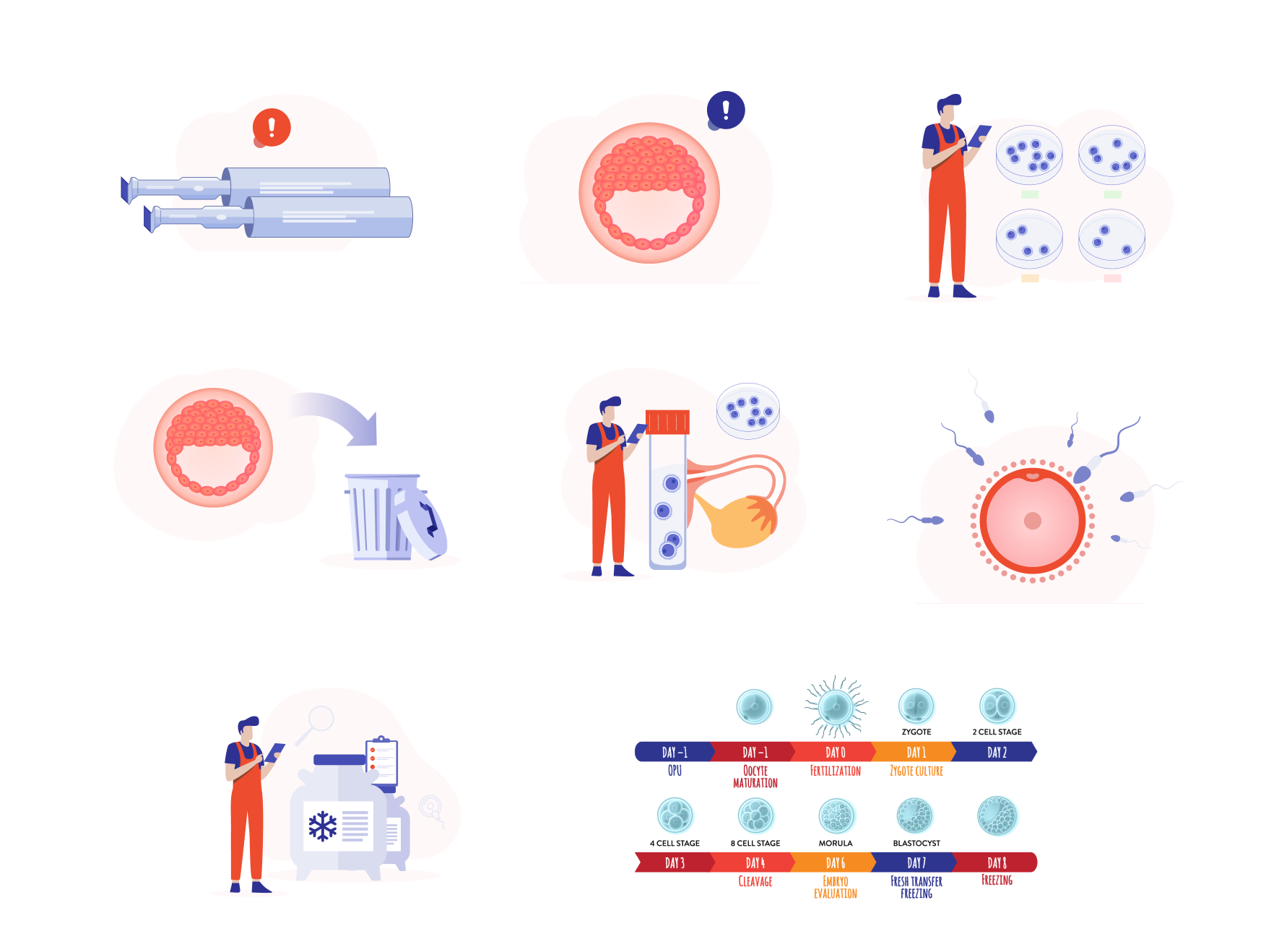
I also had the chance to showcase my illustration skills 🙂
Explore more case studies
Grammar Guide Case study
This case study showcases my journey from concept to successful implementation of Grammar Guide